One of a Kind — or Not?
 Jewelry
can be an emotional purchase, a major expenditure, often marking a life-changing
occasion. The buyer thinks of that ring as unique, custom-made, one-of-a-kind,
irreplaceable – only it's… not.
Jewelry
can be an emotional purchase, a major expenditure, often marking a life-changing
occasion. The buyer thinks of that ring as unique, custom-made, one-of-a-kind,
irreplaceable – only it's… not.
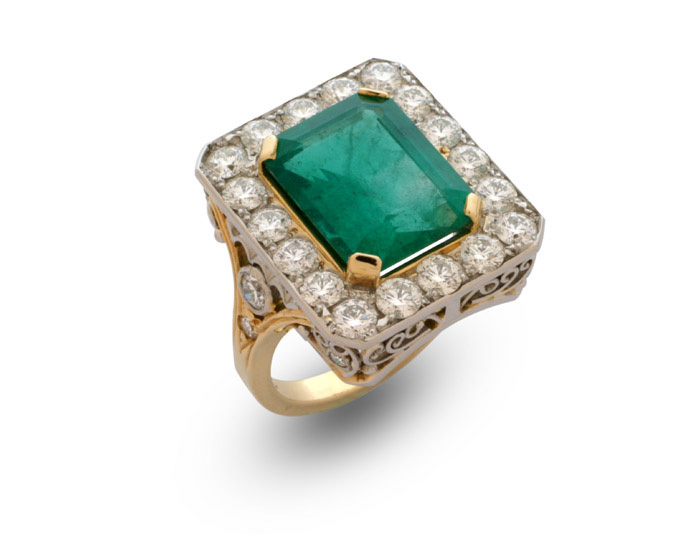
Here are some terms often used in connection with jewelry. They might even appear on an appraisal. It's a good idea to know what they mean — or rather, what they don't mean.
Custom-Made
As far as jewelry is concerned, "custom-made" is a meaningless term. Most jewelry today is made of prefabricated parts put together. A jeweler can order from catalogs some basic ring shanks (the part that surrounds the finger), heads (what holds the stone), and gemstones, and put them together. Or the parts may be put together by a manufacturer and sold to the retailer as complete pieces.
A buyer may be shown a ring but prefer that design set with a different stone. The jeweler constructs a ring to these specifications, or orders one so constructed. Such workmanship would correctly be described on the appraisal as "cast and hand-assembled."
This ring is custom-made in the sense that your kitchen sink is custom-made, since all the plumbing underneath has been put together to fit.
 Even
a piece designed from scratch is not necessarily unique. Suppose you had someone
carve a wax model and make a mold, from which your jewelry was then cast.
If that mold was broken or was given to you after your piece was made, your
jewelry is unique. Otherwise, the mold may be used again and again —
and your jewelry is no longer unique.
Even
a piece designed from scratch is not necessarily unique. Suppose you had someone
carve a wax model and make a mold, from which your jewelry was then cast.
If that mold was broken or was given to you after your piece was made, your
jewelry is unique. Otherwise, the mold may be used again and again —
and your jewelry is no longer unique.
Such misuse of "custom" designs was involved in a widely publicized case a few years ago. Brad Pitt and Jennifer Aniston sued the Italian jewelry house Damiani, which had made their engagement ring and wedding bands, for reproducing the rings without their knowledge. (The suit was resolved by Pitt joining Damiani "to create an exclusive jewelry collection.")
Handmade
Occasionally jewelry is handmade, but handmade does not mean unique. Nor does it mean the piece is irreplaceable. If a picture of the jewelry exists, or if the jewelry is merely damaged, the piece can usually be reconstructed. Making a match for a lost earring, even one that is handmade, will cost the insurer less than paying a total loss.
Except for the work of famous artists, jewelry is usually not copyrightable as it is generally considered "prior art." That is, it's just a variation of something that already exists. And it can be made again.
In these days of computer-aided design, it is easy to duplicate almost any jewelry, including handmade and custom-made pieces. Just because it's unique doesn't mean it can't be recreated. One jewelry replacement lab regularly uses CAD-CAM equipment to help insurers and their clients replace what was thought to be irreplaceable.
One of a Kind, Unique
Extremely few items of jewelry are really unique, one-of-a-kind pieces. The Hope Diamond is unique because of its size and quality.
-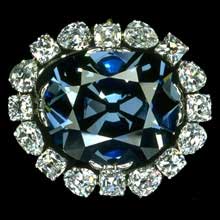
The Hope Diamond (click for larger image)
Or a piece may be unique because of its history. The art deco style was popular in the early 20th century, and a number of bracelets similar to this one would have been made. However, this one belonged to Howard and Florence Wolverton, the first kidnap and extortion victims of notorious Machine Gun Kelly, and the bracelet's provenance makes it unique. Also, the bracelet's remarkable star sapphire would be difficult to replace.
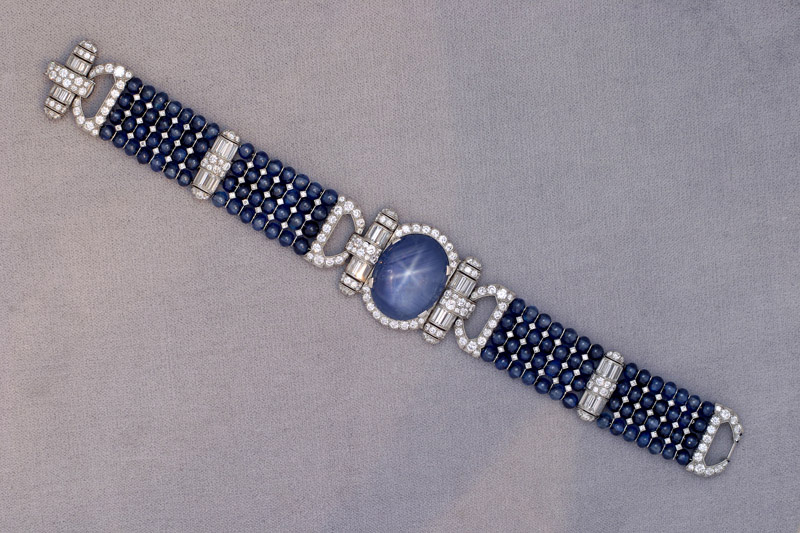
Woolverton Bracelet from the Machine-Gun Kelly Kidnapping
Collection
(click for larger image)
In rare cases the jewelry may be of unique workmanship that is not reproducible. In this set of 18-karat gold watches, each elaborately fashioned watch depicts a different animal motif inspired by the Chinese zodiac. They were made on special order of an Asian royal family and most likely could not be duplicated.
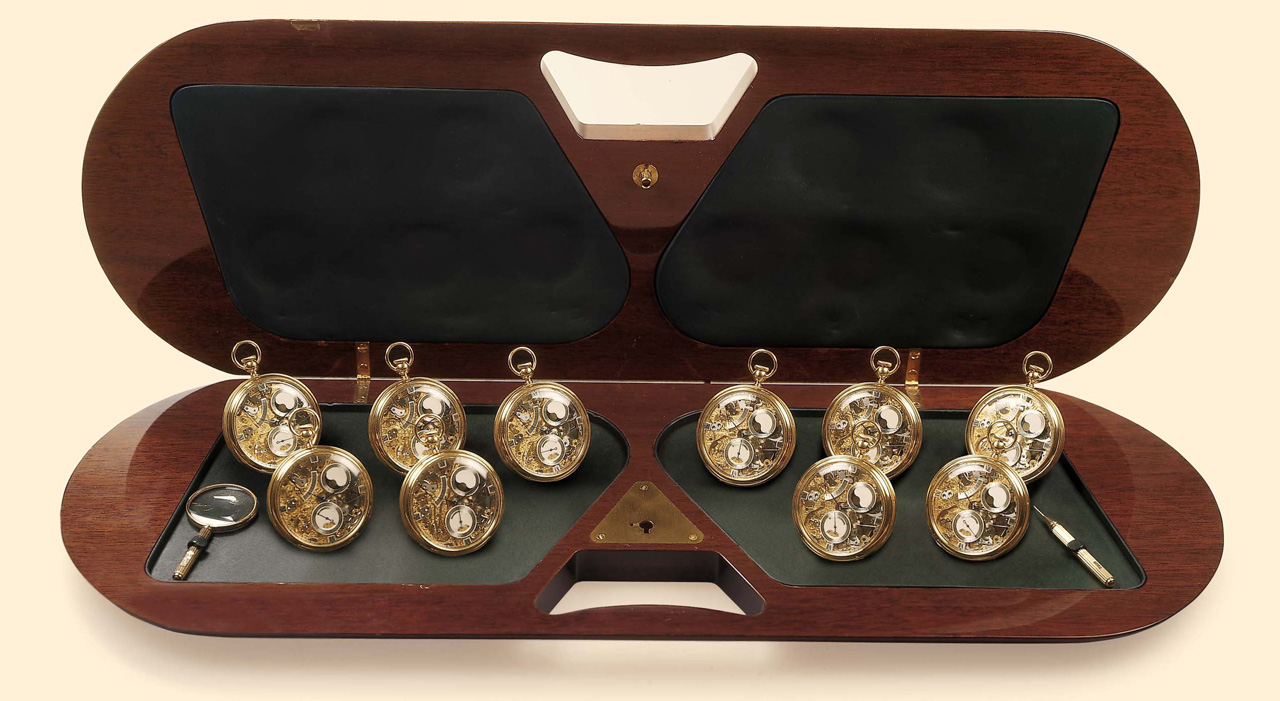
Chinese Zodiac Watches (click to enlarge)
Manufacturer & Style Number
As noted above, the vast majority of jewelry sold today is manufactured in quantity. Most consumers are not aware that their jewelry purchase was ordered by the retailer from a catalog and that it even has a manufacturer's style number. Jewelers tend to conceal this information in order to prevent comparison shopping and to encourage the belief that each piece of jewelry is unique.
Consequently, manufacturer and style number are hardly ever disclosed on the appraisal (see Appraisal Study). If they were, the adjuster's job would be infinitely easier, and the replacement would be the same as the original. This is routinely done with watches, as manufacturer and style number are usually known. To move in this direction with all jewelry, the insurance industry's standard Jewelry Appraisal form (ACORD 78/79) specifically requests manufacturer and style number.
The short of it is: you will seldom encounter one-of-a-kind items. With few exceptions, it is the jewelry's quality of workmanship and gems, rather than uniqueness, that determines value.
FOR AGENTS & UNDERWRITERS
The vast majority of jewelry is not unique and does not depend on rarity for its value.
For accurate valuation, rely on the insurance industry's standard Jewelry Appraisal form (ACORD 78/79), prepared by a Certified Insurance Appraiser™ (CIA).
The appraisal should include a photo of the jewelry.
FOR ADJUSTERS
Check the appraisal for the manufacturer and style number. This will greatly help you in pricing a replacement.
Never assume a lost piece cannot be duplicated or a damaged piece cannot
be repaired, even if the jewelry looks complicated or the appraisal description
is inadequate. As always, a jewelry insurance expert should be consulted before
settling the claim.
©2000-2024, JCRS Inland Marine Solutions, Inc. All Rights Reserved. www.jcrs.com
Subscribe to Jewelry Insurance Issues